“Which do you like to animate more: action scenes or acting scene?”
It’s a go-to question for me whenever I meet an animator. There’s no wrong answer.
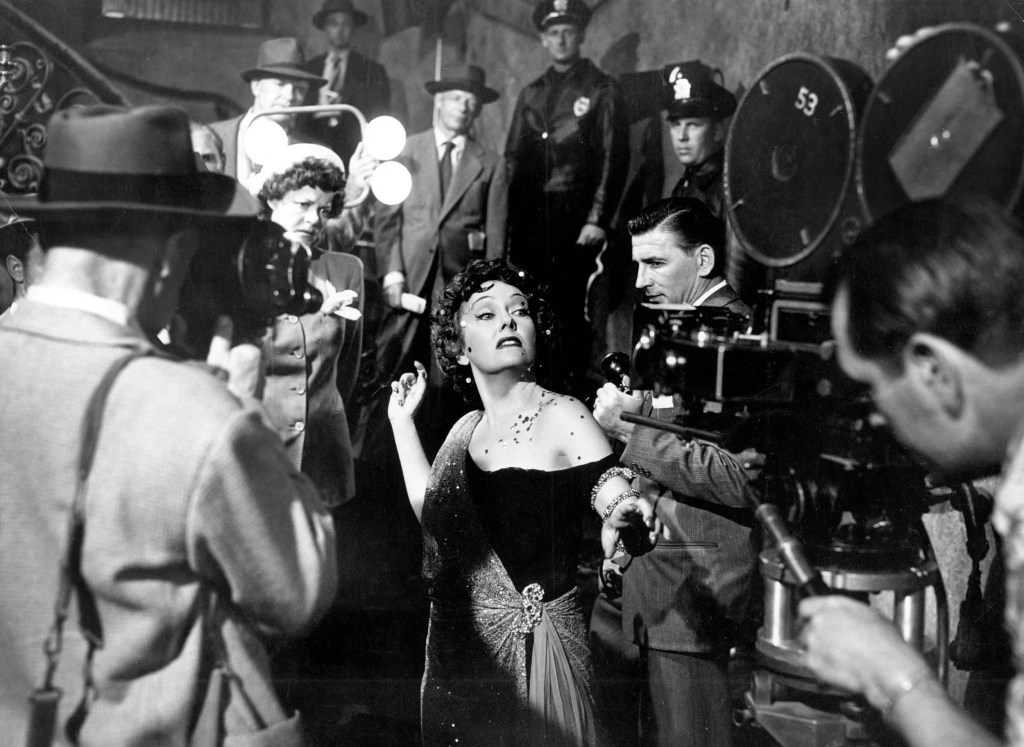
They often have a preference.
As do I. *
And yet…
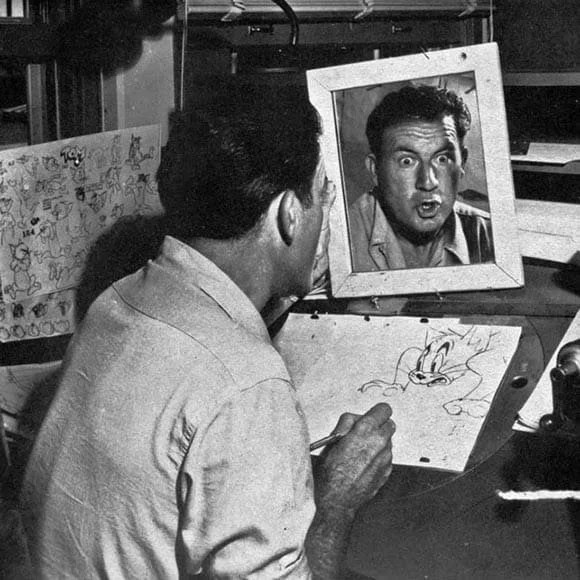
I’ve never been one to have a mirror at my desk when I’m animating.
Or to film myself.
Apart from the obvious limitations (what am I gonna do, prance around on all fours and jump off a cliff to figure out how a certain magical flying horse would do it?), I’ve always found animating a deeply internal and intuitive process.
Which isn’t to say that said internality doesn’t end up showing in my body as I sit at my desk, drawing. Or that I don’t move around at all. But it’s the feeling, or rather, the knowing of the feeling (both internal and external) that informs my drawings and choice of keys, rather than their visual presentation on my body.
How does it feel to do a big side stretch?
How does it feel to be nauseous? (Sidenote, I really don’t miss working on boys comedy series.)
How does it feel to realize I’ve really fucked something up?
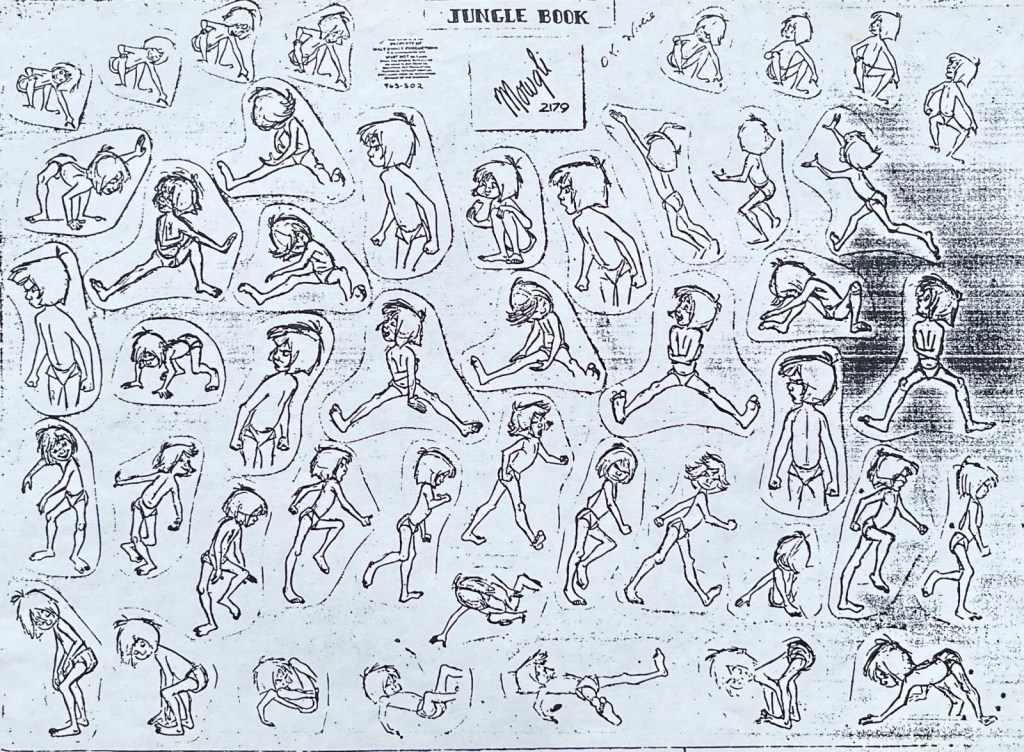
But trying to copy a reflection or filmed footage feels just like that: copying. And anyone who collected model sheets (before they were easy to come by online) knows what happens when you photocopy a photocopy of a photocopy…
Which was why I was thrilled to hear Helen Mirren talk about her take on mirrors and acting in her Masterclass a few years ago:
Never act in front of a mirror because you are doing the exact opposite of what acting is about. Acting is all about, of course, exterior elements. But it’s what’s happening, the acting-ness of what’s happening, is happening within you. […] You’ll lead yourself into terrible, fake acting.
YES! Thank you.

So why, then, does the mirror thing have such a chokehold on the animation world?
In her Respect for Acting (and after some lovely bit of sass), Uta Hagen dives into the characteristics and differences between two main approaches to acting:
Representational and Presentational.
The Representational actor deliberately chooses to imitate or illustrate the character’s behaviour. The Presentational actor attempts to reveal human behaviour through a use of himself, through an understanding of himself and consequently an understanding of the character he is portraying.
Sound familiar?
The Representational actor finds a norm based on an objective result for the character, which he then carefully watches as he executes it. The Presentational actor trusts that a form will result from identification with the character and the discovery of his character’s actions, and works on stage for a moment-to-moment subjective experience.
Think back to the coverage of acting in your animation training, if you had any.
I remember at one point being made to buy a book about pantomime…

All that said, it’s hard to avoid a certain focus on external results when you’re animating. Since you’re creating an external representation in the first place, in many ways it’s unavoidable. Add to that performance expectations that are often choreographed (and more or less set in stone, depending on the production) at the storyboard stage, and, yeah… the chasm between acting in animation and acting for the stage or screen grows and grows.
But back to Uta! She goes on to say:
Formalized, external acting (Representational) has a strong tendency to follow fashion. Internal acting (Presentational) rejects fashion and consequently can become as timeless as human experience itself.
You have to admit the lady has a point.
Especially when you consider the way the animation industry operates…
Note that no one’s talking Method here.
Which, speaking of, have you seen the clips of Kristen Stewart that made the rounds during her promotion run for The Chronology of Water, where she takes down (the men of) capital “M” Method?
Performance is inherently vulnerable and therefore quite embarrassing and unmasculine. There’s no bravado in suggesting that you’re a mouthpiece now for someone else’s ideas and to lend yourself… it’s just inherently submissive.
Queen shit.
The whole interview is fantastic and makes me so happy.
“But you can’t teach acting for animators the same way you teach it for the stage or the screen.”
I call bullshit.
For all their differences, I believe that much can be learned from acting theory and applied to animation. Obstacles and intention DO apply in animated work, as does the fact that acting is reacting and doing (NOT emoting.) If anything, I’d argue that way too many animators aren’t aware of these very basic principles.
Which is why, after years of sticking my nose into books, I finally made the jump to add actual classes this year.
IRL.
(Being in between work contracts and having both time and energy to spare also helped.)
But another big reason I wanted to take acting classes was to learn how to be a better director, especially in voice recording sessions.
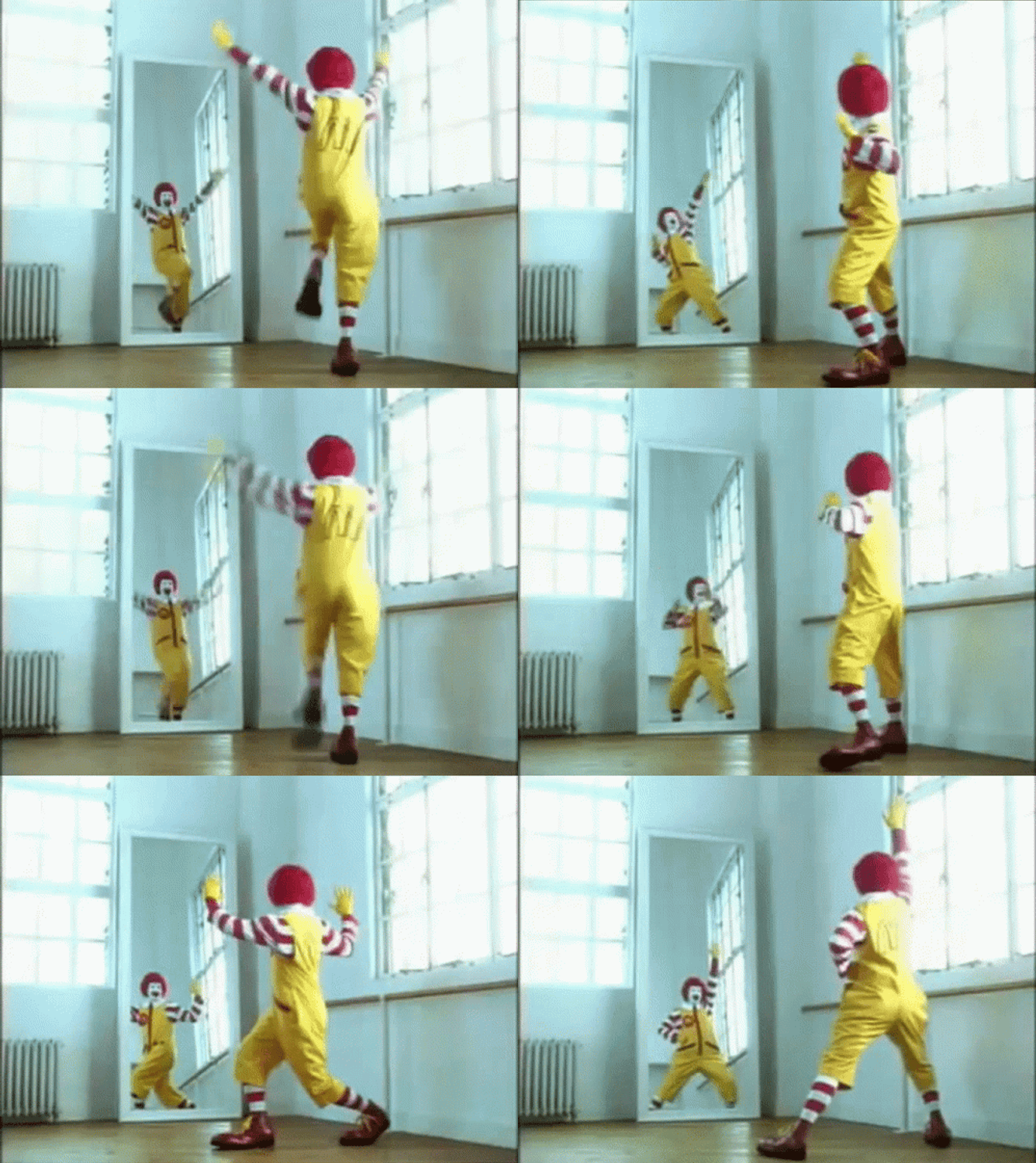
It’s been my experience that directors in animation tend to give results-based notes (“make her more sad!”), which even as an animator tends to piss me off. My hot take is that McDonald’s-y description of the emotional result you’re chasing is more likely to lead to McDonald’s-y results. And this is especially true when you’re working with animators who aren’t as used to taking shitty (sorry!!) director notes and knowing how to transform them into something they can work with, which is something that actors have to do.
I have animation experience, so I know how to talk to animators. But I’ve never been a voice actor. And the last time I was on stage was in high school.
It was time to put myself in the shoes of the people I was working with.
A funny thing starts to happen when you nerd out too much about acting as an animator, though…
You start to hit a wall.
Because much of what you learn, although valuable, ends up applying just as much (if not more) to the work done by the writers, the storyboard artists, and the voice actors before you even have a chance to look at the scene.
In his book The Intent to Live, Larry Moss brings up this pearl of wisdom from Sanford Meisner:
Don’t cry or get angry unless you’ve done everything you can to hold it back.
GREAT bit of advice. SO solid. Yes!
The same goes for his (Moss’s) take on how to approach comedy:
[…] comic behaviour is built on real, human reasons that the audience can recognize and not just to try to encourage laughs and to show off. Early in rehearsal, in grounding your performance in truth, you can go through a stage where your rehearsal process doesn’t necessarily concern itself with being funny because you are simply going for the truth.
YES!! One THOUSAND percent!
BUT!
How do you act on that when the scene you’ve been handed has already been storyboarded and the voice actor has already been instructed to wail in your headphones?
In many ways, it’s why I find myself enjoying directing so much, despite never having any ambitions to go down that path.
And, in many ways, it’s why my short stint in class has already had a big impact on my writing and development work.
But, most of all, I’ve been learning about myself.

Something that comes up a lot in class is this observation that acting problems are life problems (and vice versa.)
And so I’ve had to deal with the fact that the last 15+ years of doing the paradoxal work of “acting” but while being a hermit at a desk has had an impact on how I show up in class (and in the world.) Accessing deep and intense emotions at the drop of a hat? Surprisingly easy. Being okay with just being in front of a crowd of people? Not so much.
Ultimately, you have to find what works for you.
I had to find my own way to work on my main note from my acting teacher over the last few months:
“Are you breathing?”
Not unlike focusing on a results-based approach, I had to find a way to just keep breathing as I was doing scene work. Because just trying to remind myself to breathe just wasn’t happening.
I read about the Alexander Technique and looked up work by Jean-Louis Rodrigue and learned about the concept of Inhibition: the ability to take time to choose the manner in which you respond.
(Again, acting problems are life problems. Turns out that living under daily and weekly quota deadlines for years on end does something to you!)
Trying to remind myself to breathe wasn’t getting me anywhere. But literally taking a moment to tell myself “I have time” before I jump into a scene (or if I catch myself slipping while in one) is what gets me the result I’m after.
Again, find what works for you.
And if using mirrors and filming yourself gets you there, then by all means.
* I like to animate acting scenes.

