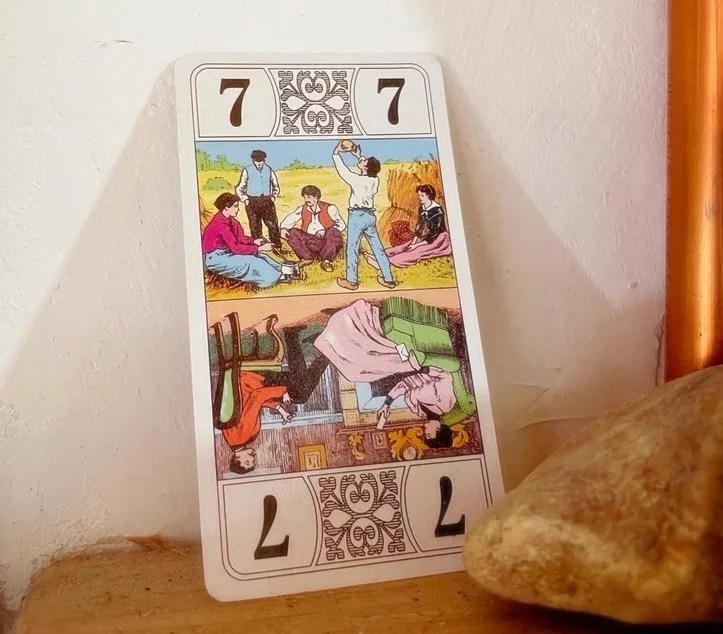
ON RANDOMNESS: Plans, Prayer, and AI
People ask you what your favourite part of the Camino was, and it always feels like an impossible question to answer. The walk, the views, the encounters, the joys, the pains, the epiphanies, the doubt… soon enough, it all becomes a whole.
But the encounters are definitely a highlight.
Which I recognize might be a weird thing for me to say, since I’m such an introvert in my “normal” life. But on the Camino, it’s weirder not to strike up a conversation with strangers around you.
(Now, at home in Vancouver, I often kinda feel kinda bummed at the extent to which everyone keeps to themselves… Enter a typical coffee shop and everyone works so hard to stay in their own bubble. Although I still often get the urge to go back to my Camino ways and talk to strangers, I always chicken out. I can just imagine what a typical Vancouverite’s reaction would be — my own.)
One of my favourite meetings on the Camino was with Brian, whom I was introduced to through my friend Melissa while we were walking together on a particularly cold and blustery day on the Meseta. We all huddled around warm drinks in a cafe while we rested our legs, and I learned that Brian teaches both anthropology and trauma and healing at a faith-based institution in the States. (Was Brian Brother Brian? It never came up, and I didn’t want to pry.)
We talked about a lot of things while we walked together for the first time that day, from his project of gathering data on the Camino to the Cajuns to religion to politics.
“Damn the plan!” he exclaimed at one point.
Brian wasn’t so sure that God has a plan for everyone. What he did believe was that love is always a choice. He gave me the best gift of my Camino when we parted that day:
“Think about randomness, and please tell me what came up if we meet again.”
This being the Camino (and despite not having each other’s contact information until I left Spain), of course we met again! More than once. And in the meantime, I had a nice word to chew on whilst I walked.
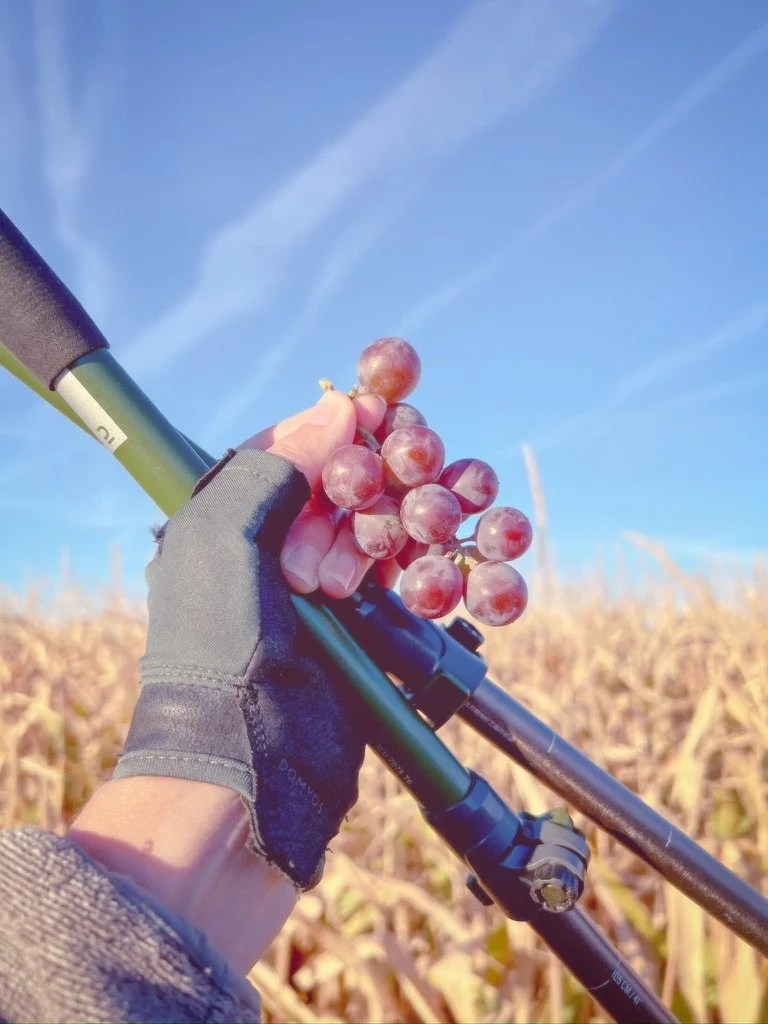
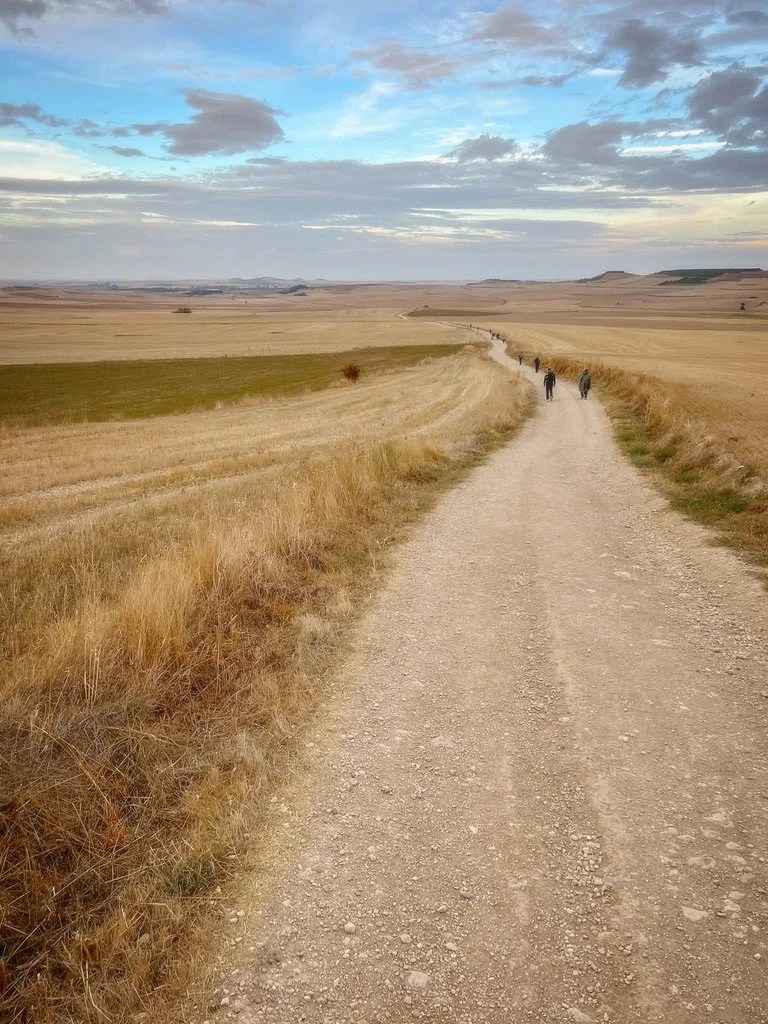
Despite the social nature of the Camino Francés, I preferred to do much of my walking alone. (The Camino didn’t transform me that much!) I was one of the early risers, out the albergue doors by 6:30-7AM. My favourite way to start the day was with stars in the sky, my trusty headlamp on my head, and not a soul around.
Quiet. Darkness. Peace.
I had anticipated that I’d be doing a lot of brainstorming while walking. Here, at home, my mind goes a mile a minute when I walk. Wouldn’t it be great if I could crack some of the stories I had on the back-burner?
But no. My mind on the Camino was a blissful blank, peppered only with small thoughts and epiphanies related to immediate matters at hand (which I’d dictate into my Drafts app):
The statement “je suis le chemin” can mean both “I am following the path” and “I am the path.”
I think it probably had to do with the wonderful effect of being outside your everyday environment and of constantly having to take in your immediate and constantly changing surroundings, getting your bearings, and keeping an eye out for yellow arrows.
You know where you’re going, but in the moment you don’t know where you’re going. Or you don’t necessarily know where you’re going. Or you don’t necessarily see where you’re going. But you know where you’re going.
The ramblings of a madwoman? Hear me out:
You know where you’re going (your end point for the day) but in the moment, you don’t know where you’re going (you’ve never walked this specific path before – you need directions.) Or you don’t necessarily know where you’re going (you haven’t booked a bed, and you’re not sure if you’ll end up walking 23 or 28KMs for the day.) Or you don’t necessarily see where you’re going (sometimes literally, such as on the foggy Pyrénés.) But you know where you’re going (Santiago.)
The Camino is an exercise in randomness.
Being vey type A, I couldn’t help coming to the Camino prepared, but I also wanted to challenge myself with not booking much in advance. I did a good amount of research and made a small list of places I wanted to try and catch on my walk: unique albergues, convents to buy nun cookies, detours with interesting landmarks…
Still, much of what made the Camino special were the unexpected surprises. The people, yes, but also the small things.
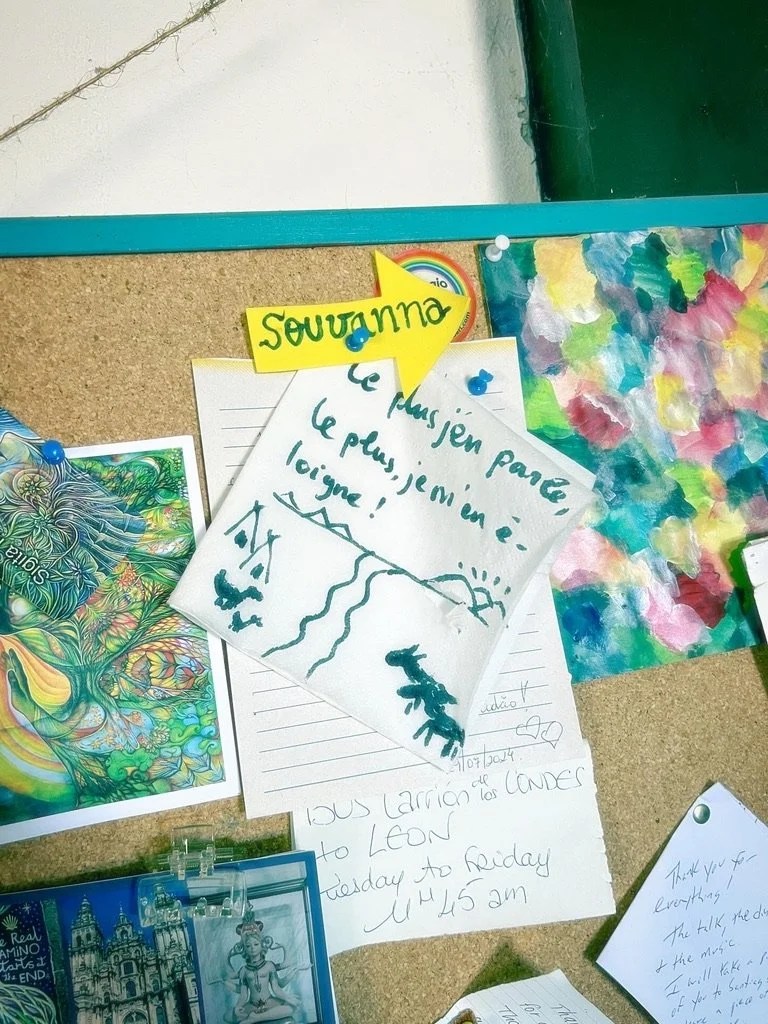
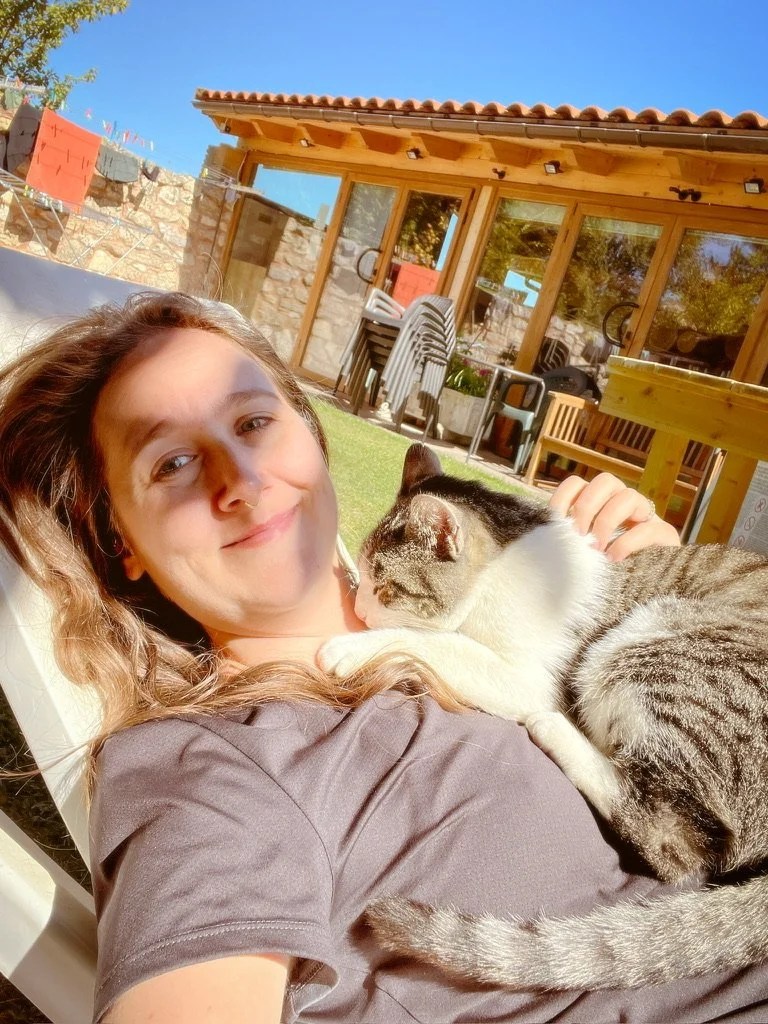
After walking in the middle of nowhere for hours, I’d often start to crave fruit. One warm, sunny day on the Meseta, my legs were aching for a break, my last meal was far enough behind, and my stomach was getting grumbly.
And I stumbled on an oasis.
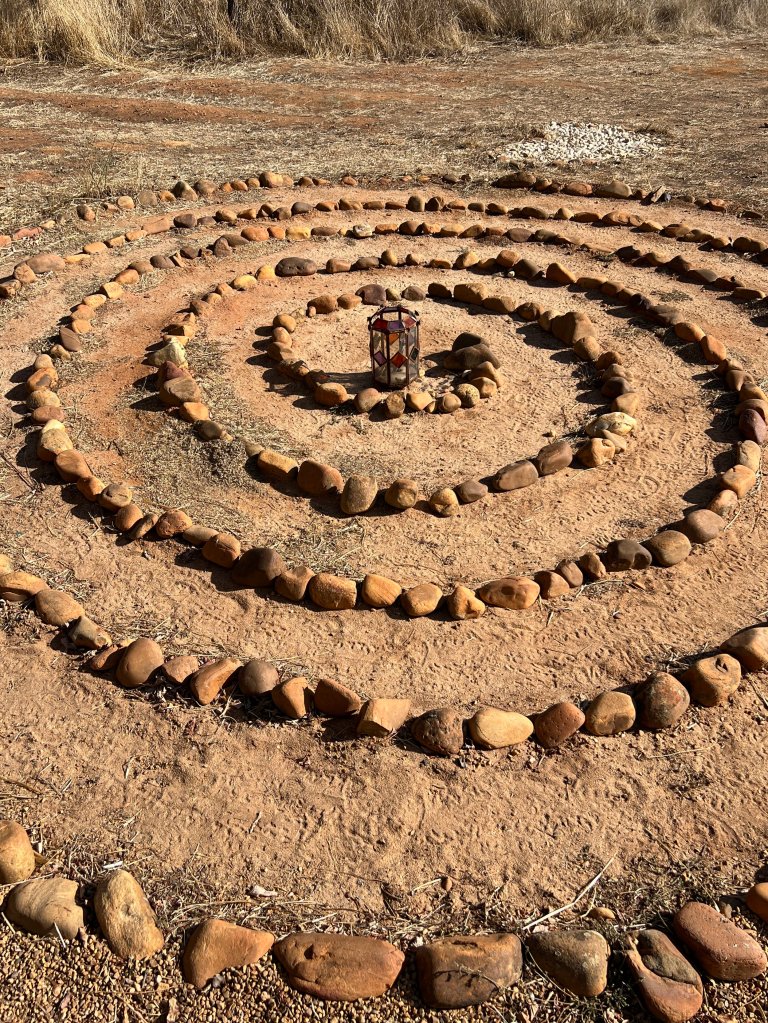
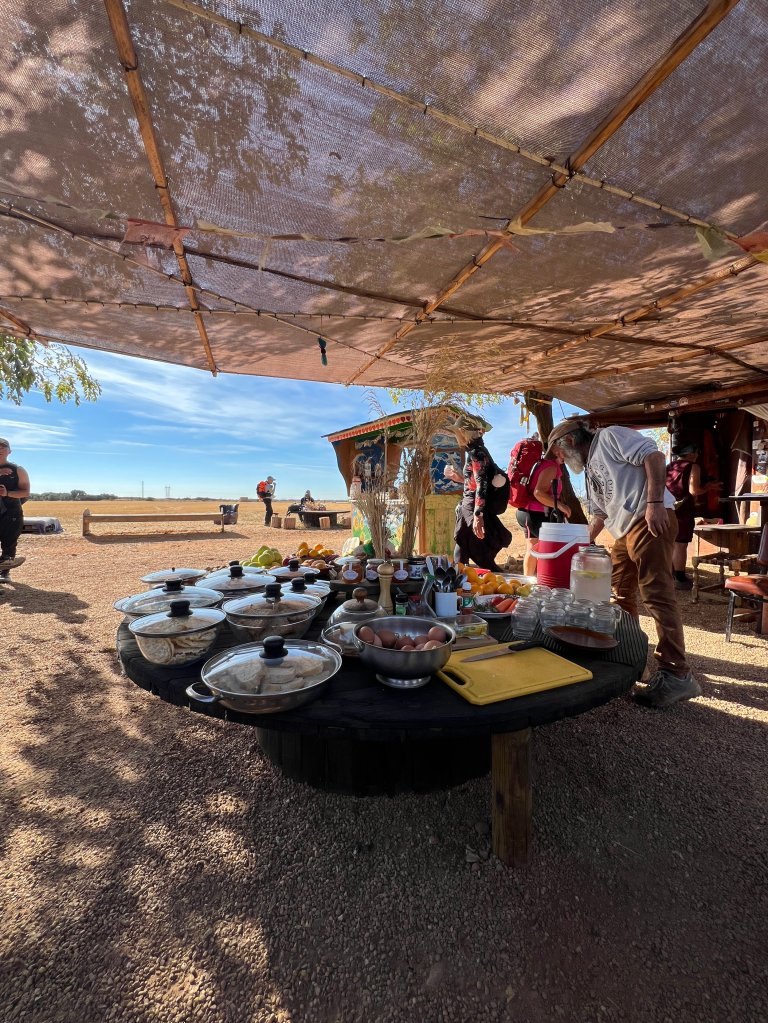
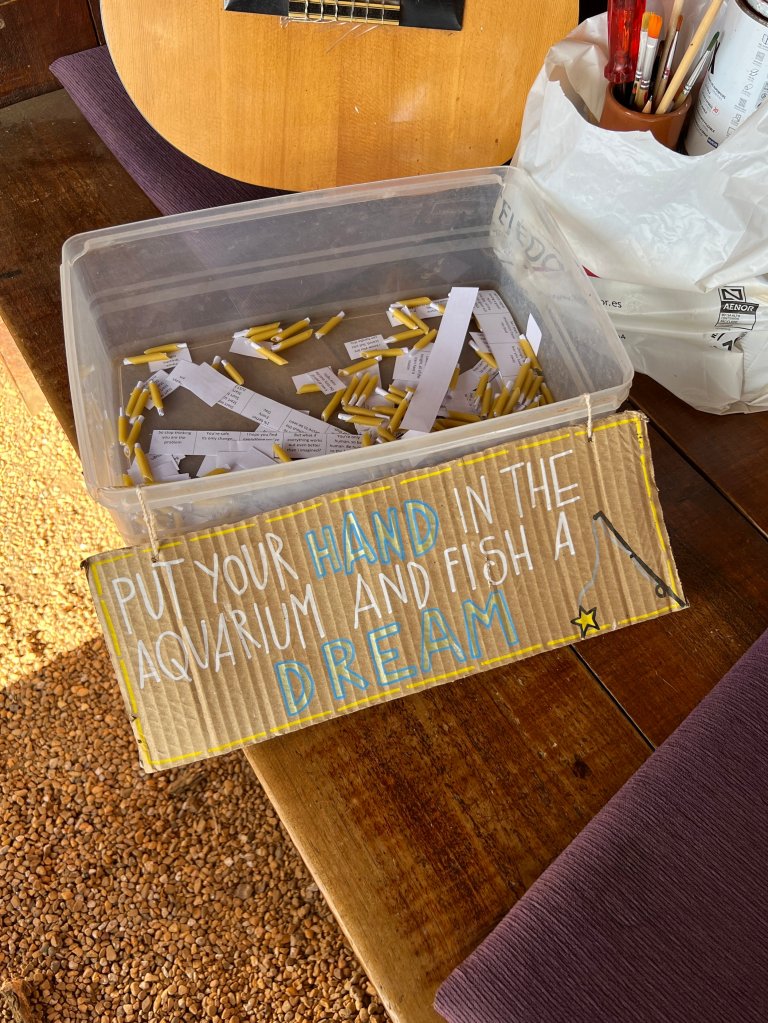
I don’t want to say much about it, because the randomness of it is what made it so special. A makeshift campsite. Art installations. Lots of places to sit in the shade and undo your hiking shoes. And the most lavish spread of fruit, breads, cakes and cookies, freshly squeezed orange juice, freshly squeezed lemonade, coffee, tea I’d seen all Camino… all donativo.
(Donativo, meaning by donation, meaning if you have the means, you donate just as much as you would pay for something, if not more, so that there’s something for everyone, especially pilgrims who are in a pinch. This is especially true when it comes to donativo albergues.)
The whole thing was run by a woman who lives there for part of the year. It’s on a section of the Camino where the road splits, and for a while there are two paths. I just happened to find myself on the path with this oasis.
Randomness!
And I randomly ran into Melissa there, who had also taken the same path. This was and would continue to be a Camino constant for us.
The lack of a plan can make things harder, but it makes things more meaningful.
The Camino was an exercise in randomness, and I was glad to have an extra reason to pay attention along the way.
Not entirely unrelated, the topic of AI came up surprisingly often on the Camino.
From one who used ChatGPT to make a list of “top albergues” to the poor innocents who swore they were anti-AI but “use Gemini all the time” to help with this that or the other… it sort of surprised me that the pilgrims I encountered who were all about it weren’t the young ones at all. I was both pleasantly surprised and disappointed.
They were all old enough to know better.
And so AI and randomness quickly became entwined in my mind, as I put one foot in front of the other. And I remembered reading that randomness is one of the hardest things for tech to do. In the sense of, if your music playlist was truly randomized, it wouldn’t feel random to you. Not random enough. Namely, if I remember it right, tracks would repeat too often. It’s actually incredibly complex to create something artificially that feels actually organically random.
A computer can never truly be random. AI can never truly be random. Randomness is an inherently human gift.
BOOM.
The next time I ran into Brian (which was after an especially emotionally tough day, so I was extra glad to catch up) I updated him about my thoughts on randomness and AI. Which he loved. He didn’t think that AI could pray.
Because “why would it need to?”
…I forget if that was the day he told me that my being resistance to prayer said more about my relationship to myself than my relationship to God.
(Melissa laughed REALLY heard when I told her about that one the next time we randomly ran into each other.)
I do wonder if he heard about Pope Leo’s recent warning against “the temptation to prepare homilies with Artificial Intelligence” and if it reminds him of our talks on the Camino…
I keep the dream I fished from the Meseta oasis donativo, along with a couple other random things, close to my heart. Mundane events and connections on the surface to anyone else, but to me… they were special confirmations that I’m on the right path. Still.

